

Articles Fueling

The Bonk: Why It Happens – And How to Avoid It for Good

It usually hits around hour two. Your legs turn to lead, your mind goes blank, your pace collapses. You're bonking. The good news: it's almost always preventable – once you understand the biochemistry behind it.

What is bonking, exactly?

The "bonk" – also called "hitting the wall" – describes an acute performance collapse caused by glycogen depletion: the near-complete exhaustion of your carbohydrate stores in muscles and liver. Your body can use fat as fuel, but fat oxidation alone isn't fast enough to sustain moderate-to-high intensity effort.[1]

The result: your brain receives insufficient glucose, performance crumbles, concentration and coordination suffer – and the feeling that you simply cannot continue hits suddenly, with little warning.

~500g Total glycogen in the body
90 min Until depletion at high intensity
60–90g Carbs per hour recommended

The biochemistry in 3 minutes

Your body stores carbohydrates as glycogen – in your muscles (approx. 400 g) and liver (approx. 100 g). During moderate-to-high intensity effort, carbohydrates are your primary fuel because they can be metabolised far more efficiently than fat.

These stores last approximately 60 to 90 minutes depending on intensity. Anyone going longer without refuelling risks full depletion.[2] And empty stores mean no fast glycogen for your muscles, and no glucose supply for your brain.

Important to know

A bonk doesn't only happen during long efforts. Training fasted in the morning already means reduced liver glycogen stores – an interval session on depleted reserves can become a problem even after just 45 minutes.

The most common mistakes

Starting to eat too late

Many athletes wait until they feel weak – by then it's too late. Once stores are depleted, they can barely be replenished during exercise because the gut under stress absorbs less. The rule of thumb: start fuelling no later than 30–45 minutes in, not when you feel a drop coming.[3]

SUPLiR

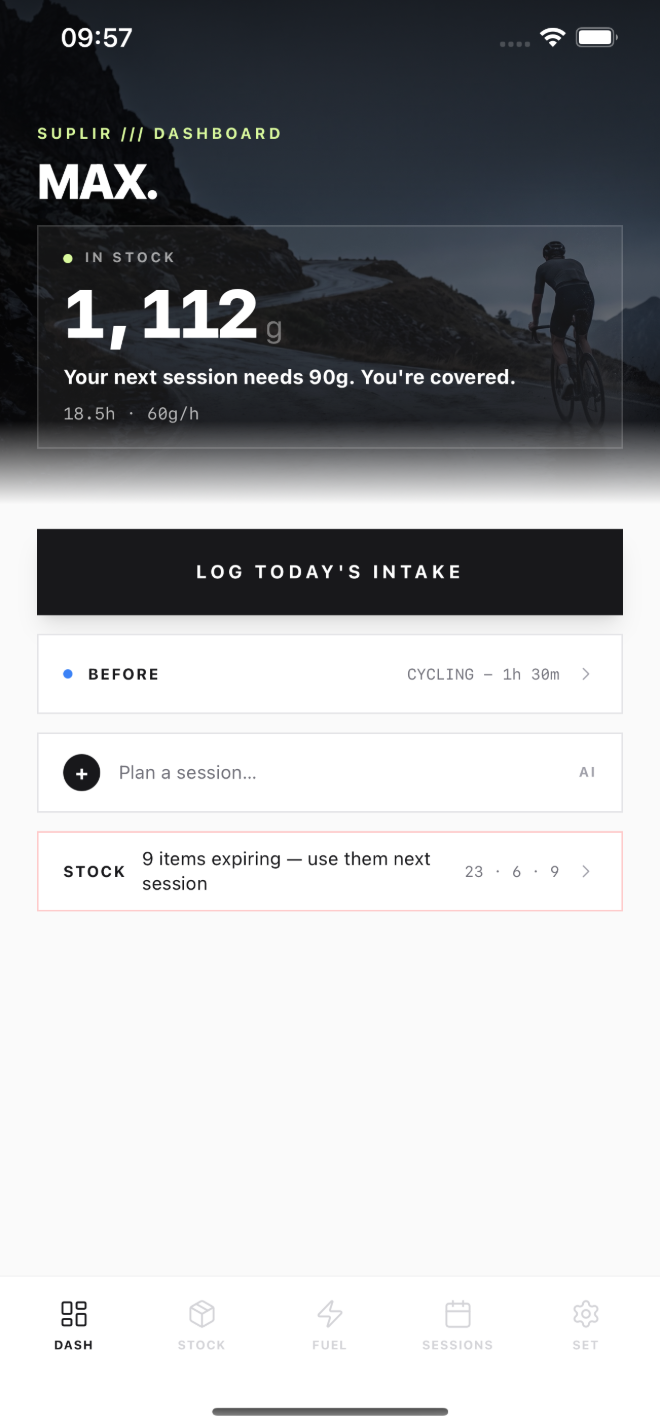
The fuel plan in SUPLiR calculates your personal timing automatically – based on activity duration and intensity. Before you start, you see exactly what to take and when. No guesswork under load.

Not enough carbohydrates per hour

Sports scientists recommend between 60 and 90 g of carbohydrates per hour for efforts lasting over 90 minutes.[2] Trained endurance athletes with the right product combination can process up to 120 g/h.[4] A single gel (approx. 25 g carbs) is nowhere near enough.

Minimum fueling rule of thumb
From 60 min effort: ≥ 30 g carbs/h
From 90 min effort: ≥ 60 g carbs/h
// Adjusted for intensity and body weight
SUPLiR

SUPLiR calculates your exact carbohydrate target per hour from your personal data – FTP, VO2max, or race pace – and adjusts the recommendation to your individual intensity zone. More on the Science page.

Using only glucose instead of glucose + fructose

The SGLT1 transporter in the gut can absorb approximately 60 g of glucose per hour at most. Those needing more must also take in fructose – which uses a separate transporter (GLUT5) and significantly increases total absorption.[4] That's why quality sports products today use a glucose-to-fructose ratio of 2:1.

No plan, poor timing

Eating spontaneously – whenever you remember – doesn't work reliably during long efforts. Cognitive decision-making measurably degrades under sustained physical load.[3] In a race, having to think about when your next gel is due costs precious mental resources – and you may skip it entirely.

SUPLiR

SUPLiR builds your complete fuelling plan before the session – which product from your inventory to take, and exactly when. You start prepared, not with a vague intention.

The right strategy

Before the session: load your stores

A carbohydrate-rich meal 2–4 hours before the start.[3] For early-morning races: easily digestible carbs like white bread, banana, or oats, at least 90 minutes before the gun.

During the session: start early, stay consistent

Begin fuelling within the first 30 minutes and follow your plan. Combine liquid carbs (sports drink) with solid sources (gels, bars) for better absorption rates and gut comfort.[2]

Use caffeine strategically

Caffeine can significantly boost endurance performance,[5] but its peak effect arrives roughly 60 minutes after intake, making timing critical. SUPLiR schedules caffeinated products no earlier than minute 45 and calculates your personal daily limit by body weight.

Scientific References

No more bonking.

SUPLiR calculates your personal fuelling plan – based on your weight, FTP, or VO2max – using the actual products from your own inventory.

Download SUPLiR
← Back to all articles