

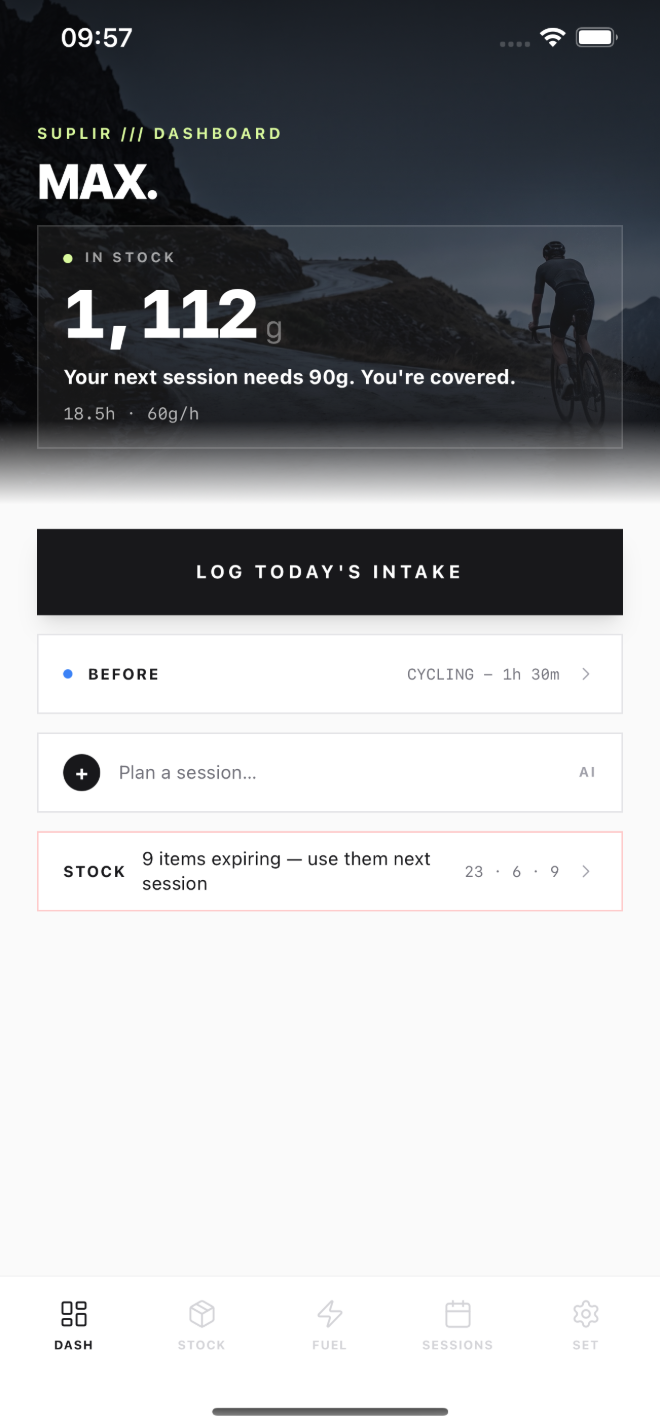
Just downloaded SUPLiR – now what? This page explains how the app is structured, what to set up first, and why getting your fueling right makes a real difference.
SUPLiR is not a training plan and not a coach. The app does one thing, but does it properly: it calculates the exact nutrition plan for any given effort – based on your physiology and the products you actually have in stock.
No more guessing. No more "I think I'll take two gels". Instead: a minute-by-minute plan that knows what's in your cupboard, how much you weigh, how hard you're training – and derives the optimal strategy from all of that.
Your digital stock – gels, bars, powders – with best-before tracking. SUPLiR only plans with products you actually have.
Evidence-based calculation of your carbohydrate and fluid needs – for training and racing.
Import planned routes directly from Strava. Distance, elevation, and pace flow automatically into your plan.
Upload structured workout files. SUPLiR reads the intensity structure and adapts the fueling block by block.
Set up your profile
Enter your body weight and FTP (Functional Threshold Power). These are the two most important parameters for the calculation – without them SUPLiR can't create meaningful plans. Don't know your FTP? An estimate is fine to start with.
Build your inventory
Photograph the back of your products or search the database. SUPLiR automatically recognises brand, product, nutritional values, and best-before date. Tip: start with the products you use regularly – five is enough to begin.
Create your first plan
Create a new activity – manually with duration and intensity, via a Strava route, or by importing a .zwo file. SUPLiR immediately generates a plan based on your inventory.
In settings you'll find an individual carbohydrate limit. This value determines the maximum grams per hour SUPLiR plans for you. The default is a good starting point – but the real potential lies in raising this value over time.
The gut is trainable. Someone who starts at 40 g/h in winter and carefully increases the limit session by session can comfortably handle 60–90 g/h by mid-season. That's not an edge case – it's a real performance difference on long efforts.
Start with a conservative limit – better too little than too much. Observe how your stomach responds during effort, and only raise the limit when you know your body is ready.